
The risk is real, the diseases are serious, and prevention works best in layers.
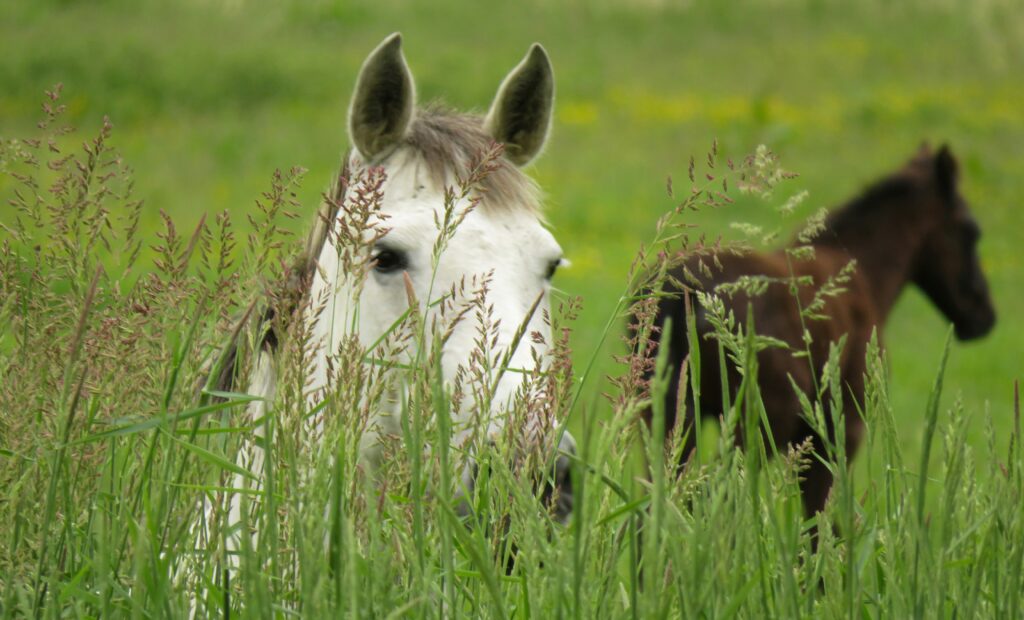
When we talk about ticks, we usually talk about people, dogs, and deer. Horses rarely make the list. That gap matters because the diseases ticks carry can hit horses hard, and the early signs are easy to miss.
We asked Erika Machtinger, PhD, associate professor of entomology and Extension Vector-borne Disease Team lead in Pennsylvania State University’s Department of Entomology, what horse owners and the professionals who advise them tend to get wrong about ticks. A lifelong equestrian and USDF silver medalist, Dr. Machtinger brings both scientific expertise and firsthand horse-world experience to the conversation.
The Tick Diseases That Matter Most
In much of the eastern United States, two tick-borne diseases pose the greatest risk to horses: anaplasmosis and Lyme disease.
“Anaplasmosis often presents as a sudden illness,” she explained. “Horses may develop a high fever, lethargy, loss of appetite, swollen lower limbs, and petechiae, which are small pinpoint hemorrhages that make the gums appear mottled or spotted. Because the signs can start quickly, owners often notice that their horse simply seems ‘off.’”
Lyme disease is harder. As in people, it is difficult to diagnose. The best-documented signs in horses are uveitis, meaning inflammation inside the eye, and neuroborreliosis, where the bacteria reach the nervous system and cause muscle atrophy, incoordination, twitching, and other neurologic problems. Owners and veterinarians also report stiffness, intermittent lameness, behavioral changes, and poor performance, but those signs are vague and overlap with many other conditions.
“One of the biggest misconceptions is that a horse with Lyme disease will always have obvious signs,” she said. “In reality, it seems many horses in endemic areas are exposed and develop antibodies without ever showing clinical signs.”
A Knowledge Gap With Real Costs
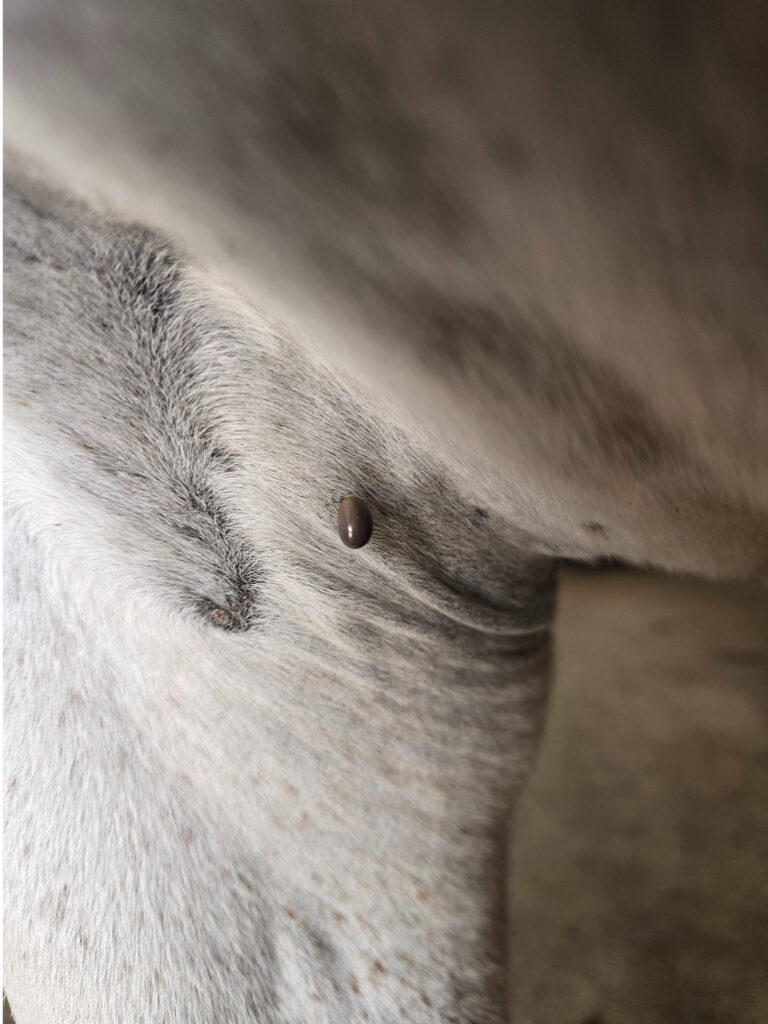
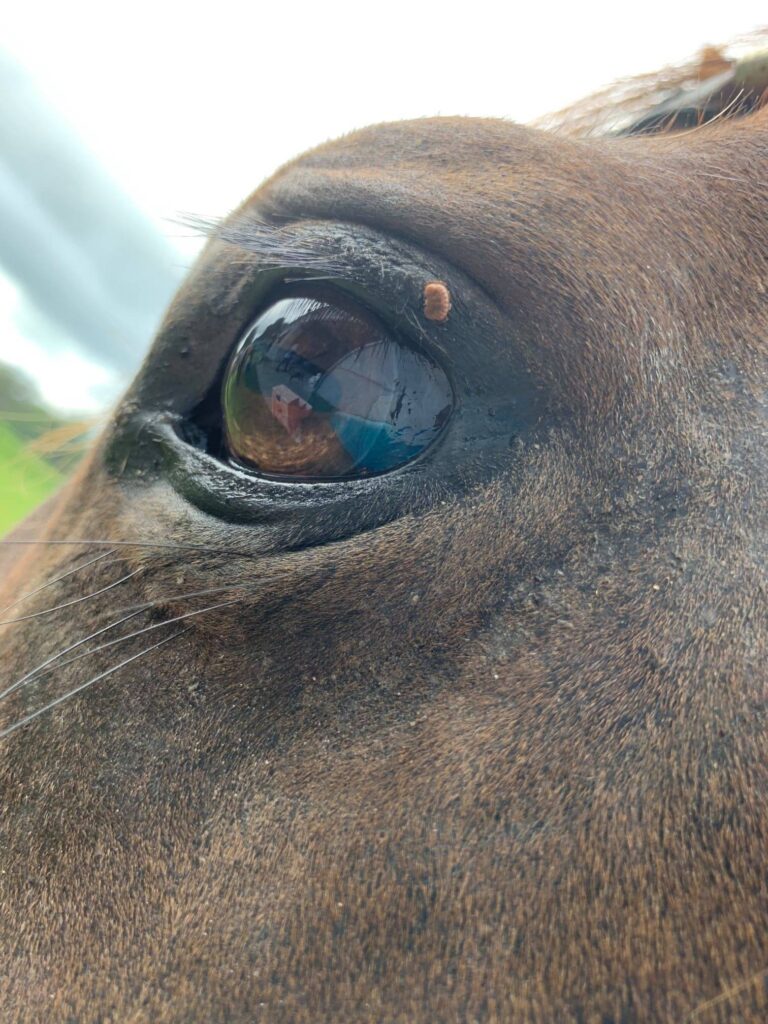
Dr. Machtinger’s surveys of horse owners and equine veterinarians turned up something striking. “The concern is there, but the knowledge and action are not always keeping pace,” she said. Many owners and even equine veterinarians struggled with basic tick identification and with knowing which ticks transmit which diseases.
That gap has a price. Horses may not get the most effective prevention, tick-borne disease can be missed or misread, and chances to act early slip by. “You cannot manage a risk you do not fully understand,” Dr. Machtinger said, “and with ticks, early recognition and prevention are still our best tools for protecting horse health.”
What Layered Tick Prevention Looks Like
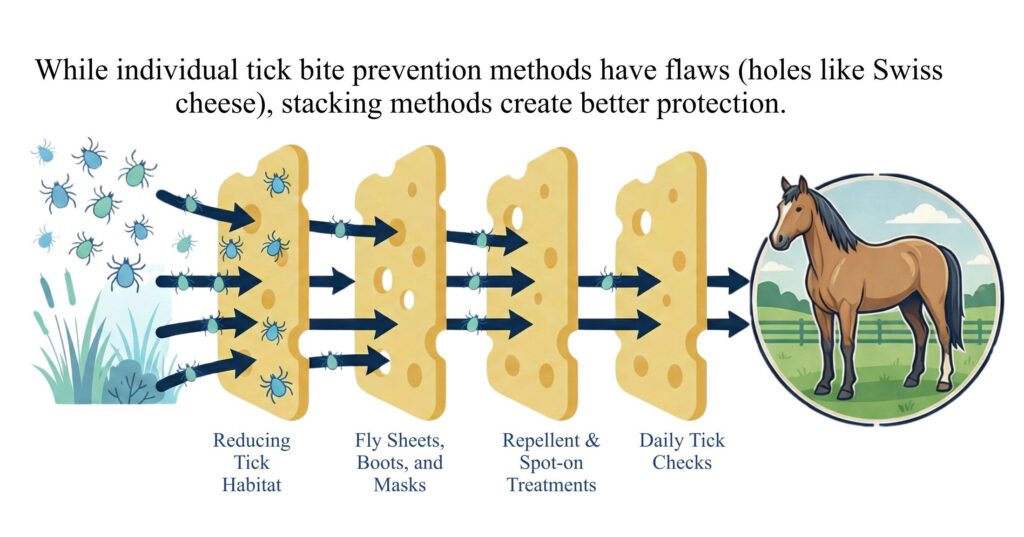
Credit: Erika Machtinger, PhD
This is where an integrated pest management mindset earns its keep. No single product or practice will make a horse farm tick-free and chasing that goal wastes money. “The goal is not to make a farm tick-free,” Dr. Machtinger said. “The goal is to reduce encounters, find ticks early, and prevent bites whenever possible.”
That takes several tactics working together. On the property: mow turnout areas, clear brush piles, cut back dense vegetation, and reduce rodent harborage near barns and paddocks. On the horse: regular tick checks, especially at common attachment sites (such as the ears, under the jaw, between the front and back legs, the belly, and under the tail), plus EPA-registered repellents or physical barriers when horses are turned out or ridden in high-risk areas. Penn State Extension has a short tick-check walkthrough video led by Dr. Machtinger, though as she notes in the linked video, ticks can attach anywhere, so it pays to check the whole horse.
The Truth About Topical Tick Products for Horses
Owners want a product that just works. For horses, that product does not yet exist. “Horses currently lack a highly effective, long-lasting tick product that serves as a clear gold standard,” said Dr. Machtinger. “Even products that list ticks on the label are often supported by limited data, and most have been tested only in the laboratory, usually against a single tick species or life stage, rather than under real farm conditions.”
Permethrin demonstrates the tradeoffs. Lower concentrations may give only modest repellency. Higher concentrations can work better, but studies of 5% and 10% permethrin on horses found significant skin irritation and tissue damage, and no products are labeled for use on horses at those concentrations.
A few other options show promise, with caveats, she explained. Equi-Spot is one of the few horse-labeled products that includes tick control, though published efficacy data in horses remain sparse. Fipronil is highly effective against ticks and works well in some small-animal products, but it is not labeled for horses in the United States and can only be used off-label when prescribed by a veterinarian. Fatty acids such as C8910 may have potential but have not been adequately tested for tick prevention in horses.
Application technique is also important. “Even a good product will perform poorly if it is lightly sprayed onto the hair coat and never reaches the skin surface,” Dr. Machtinger explained. “Products should always be applied according to the label and worked into the coat with a mitt, towel, or brush to maximize contact.
“The bottom line is that repellents can help, but they are imperfect tools,” she added. “They should be viewed as one layer of protection within a broader strategy that includes tick checks, habitat management, and physical barriers.”
What an Equine Tick Expert Does to Protect Her Own Horses
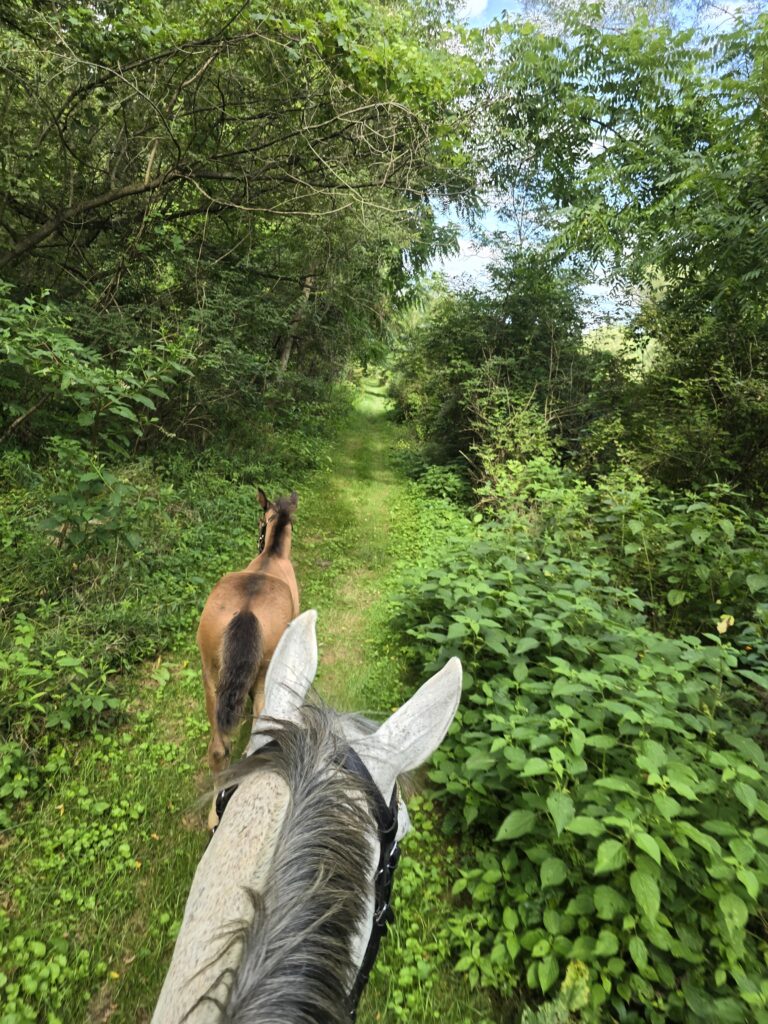
Dr. Machtinger keeps two horses, a mare and her yearling colt, the third generation of his family that she has owned. “These horses are incredibly important to me,” she said, “not just as animals I care for, but as part of my family and history with horses.” Her routine reflects both the science and what she can sustain day to day.
Working with her veterinarian, she uses a monthly fipronil treatment from April through November to cover the periods when blacklegged ticks are most active: spring adults, summer nymphs, and fall adults. When riding or turning out in risky habitat, she adds a daily insect repellent containing C8910 fatty acids. In higher-risk turnout, her horses wear fly boots and fly masks, which may cut down on attachment opportunities. And each day she is at the farm, she does tick checks as part of her normal grooming routine.
“No product is perfect, so I view tick checks as my last and most important line of defense,” she said. “The best protection comes from combining multiple strategies and using them consistently.”
The Most Common Tick Mistake
“The most common mistake is relying on products or practices that have not been supported by science,” Dr. Machtinger said.
Homemade repellents are not rigorously tested for safety or efficacy. Essential oils can irritate skin and, in some cases, may be harmful when inhaled by people or animals. And there is no evidence that feeding horses garlic prevents tick bites, and too much garlic brings its own health risks.
Off-label misuse is another trap. Ivermectin works well against certain internal parasites but swallowing a dewormer and applying a tick product to the skin are completely different routes of exposure. A shared active ingredient does not mean a product will stop a tick from attaching. “When it comes to ticks,” she said, “evidence-based prevention consistently outperforms shortcuts and internet remedies.”
The Bigger Picture
Most people fixate on the single tick they find. That tick is the product of a much larger system: wildlife hosts, habitat, weather, and human behavior. Seeing that system explains why there is rarely one fix, and why layered prevention keeps coming out on top.
For horse owners and veterinarians worried about ticks, look for products and recommendations that have been tested in horses, she suggested. “We often borrow information from human medicine, companion animals, or laboratory studies, but horses are unique. We need more research specifically focused on equine tick prevention so owners and veterinarians can make decisions based on evidence rather than assumptions.”
Want to go deeper on ticks and prevention? Dr. Machtinger will speak at IPM Institute’s Tick Academy, a two-day virtual event on October 14-15 that brings together veterinary, medical, and outreach experts.

