

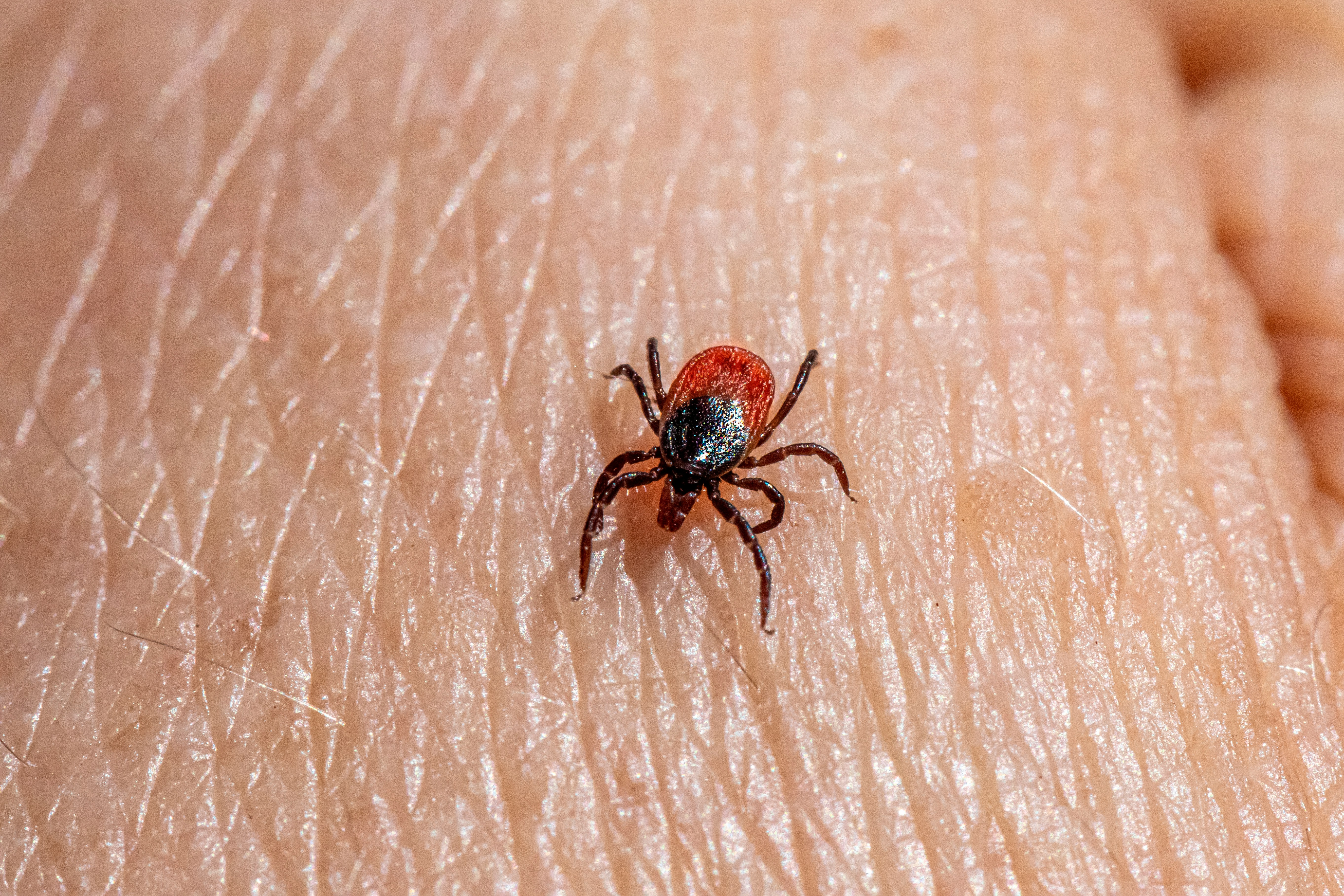
Lyme disease gets the headlines. It is the name people reach for when they find a tick on a pant leg, the disease their doctor thinks of first, the one the public health posters are built around. But Lyme is only part of the picture, and in some ways, it is the least representative part.
“Lyme disease is the poster child for any emerging tick-transmitted disease,” says Dr. Nick Ogden, a disease ecologist with the Public Health Agency of Canada and keynote speaker at IPM’s Tick Academy this October. “But the tick that transmits the agent of Lyme disease also transmits a whole load of other pathogens.”
That single tick, the blacklegged tick, can carry the agents of anaplasmosis, babesiosis, Powassan virus, and a couple of newer bacteria that researchers are still mapping. For the veterinarians, extension agents, pest management professionals, and public health workers who deal with tick exposure year-round, the practical takeaway is simple. A tick bite is not a single risk. It is a menu.
Lyme is actually the strange one
Here is the part that surprises people. The disease everyone knows is the unusual one.
“Lyme disease is probably the most unusual of them,” Ogden says, “producing the spreading red ring and then these strange symptoms like nerve damage, facial paralysis, and then the Lyme arthritis.”
Most of the others behave differently. They move faster and look more like a sudden systemic infection: high fever, feeling terrible all over, sometimes a spotty rash. That difference matters at the point of care. A patient who expects the slow-building Lyme story, or a clinician anchored to it, can be caught off guard by an illness that escalates in days.
The one people fear most: Alpha-gal syndrome
If any tick-borne condition has captured public attention lately, it is alpha-gal syndrome, the so-called red meat allergy. The fear is understandable. A tick bite can leave you allergic to a food you have eaten your whole life.
The mechanism is genuinely strange. “The tick saliva contains this sugar, which is not present in human tissues,” Ogden explains, “but it is present in the meat of most of the animals that we eat.” The sugar, galactose-alpha-1,3-galactose, shows up in beef, pork, and other mammalian meat. Once a person is sensitized, eating it can trigger a reaction, often hours later, between two and six hours after the meal, which makes the cause hard to spot.
In the United States, the lone star tick is the main culprit, though a handful of cases have been linked to other ticks. And the risk seems to build with exposure. “I can’t rule out that you can get this allergy from one tick bite,” Ogden says, “but it appears to be more likely if you’re repeatedly bitten by this tick.”
The scale is larger than most people assume. The CDC identified more than 110,000 suspected cases between 2010 and 2022, and because the condition is not nationally notifiable and is easy to miss, the agency estimates the true number could be far higher.
What should worry U.S. practitioners is where the lone star tick is going. Once a southern species, it is now established across the eastern United States and pushing north and west, with newer activity reported in places like Minnesota, Wisconsin, Michigan, and coastal New England. Warmer winters, deer populations, and birds carrying immature ticks long distances all play a role. One study of lone star tick populations in New York even found them genetically distinct from the historic southern range, raising the possibility that the tick is adapting as it spreads.
Old diseases showing up in new places
Range expansion creates a second, quieter problem. A disease that arrives somewhere new arrives in front of clinicians who may have never seen it.
Ogden points to Rocky Mountain spotted fever, which turned up in southern Ontario, well outside its expected territory. “It’s a very unpleasant bug,” he says, “and untreated it has quite a high case fatality rate. To have that emerging in places where doctors haven’t seen it before, and may not be prepared, is a bit of a concern.”
Rocky Mountain spotted fever can progress quickly to serious, life-threatening illness, and the single biggest factor separating a good outcome from a bad one is how fast the right antibiotic is started. The CDC notes that doxycycline is most effective when given within the first five days of illness. That is a disease where an unfamiliar clinician is itself a risk factor.
The populations most at risk
Farmers and other outdoor workers are at higher risk for tick exposure and the related diseases they carry. A study of 46 farms in southern Vermont found that some farmers reported as many as 70 tick encounters over six months, and 12% of respondents said they had been diagnosed with a tick-borne disease at some point.
A recent article profiled several Northeast farmers living with this reality day to day, including one vegetable farmer who has had Lyme disease more than a dozen times and a cattle farmer who removes dozens of ticks from his working dogs in a single day. The farmers spoke about chronic reinfection, delayed diagnoses, and in some cases having to scale back or sell their operations as a result of a tick-borne illness.
Other professions at risk, according to the CDC, include construction, forestry, landscaping, land surveying, park and wildlife management, and utility line work—essentially any job that puts someone in or near woods, brush, or tall grass for extended periods.
Range expansion means the list of at-risk groups is growing too. As the lone star tick pushes into new territory across the Northeast and Midwest, people who spend time outdoors recreationally, not just occupationally, are increasingly exposed to alpha-gal risk in areas where it wasn’t previously a concern.
The good news is that prevention works
For all the unsettling trends, the most effective tools are also the simplest, and they have not changed.
Cover up outdoors and use repellent. On trails, stay on the path. Ogden’s own research found that on reasonably wide paths, you encounter almost no ticks. “You actually have to go and walk into the forest to get a tick bite,” he says.
Then check yourself when you get home. “Doing tick checks when you get back home and removing ticks that are feeding on you really does work to limit transmission,” Ogden says. “And putting your clothes in the dryer will kill the ticks that have got on your clothes but haven’t started to feed on you yet.”
The map of tick-borne disease is getting larger and more complicated. The defense, for now, still fits on an index card.

