

The “boxes of ticks” story shows how legitimate tick control gets twisted and how to respond without alienating worried people.
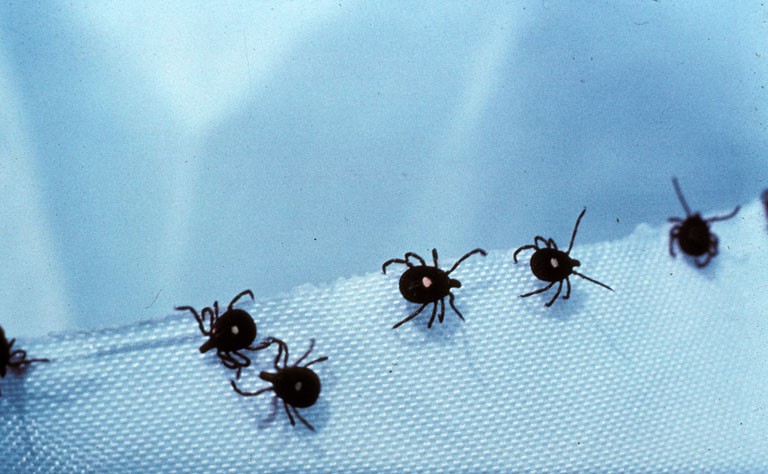
Mat Pound, USDA Agricultural Research Service, Bugwood.org
This spring, a rumor spread online claiming that scientists or companies were releasing boxes of ticks into farms, fields, and neighborhoods. It was false. But it latched onto something real: a tick-control tool that Erika Machtinger, PhD, associate professor of entomology and the Extension Vector-borne Disease Team lead at Pennsylvania State University’s Department of Entomology, has actually studied.
What Bait Boxes Really Are
Tick bait boxes are designed to reduce ticks, not release them. As Dr. Machtinger explained, they are “real tick-control tools designed to reduce, not release, ticks.” They draw in small mammals like mice and chipmunks. When an animal enters the box, it contacts a small amount of pesticide that kills the ticks feeding on it. Over time, this can lower local tick populations.
These are an integrated pest management tool in the truest sense. They target ticks on the wildlife hosts that carry them, rather than blanketing the landscape with chemicals.
How the Story Got Twisted
Here is the strange part. Many of the videos fueling the rumor do not show bait boxes at all. A lot of them appear to show Sherman traps, the live-capture devices wildlife researchers use to study small mammals. When someone tips one over, ants or other small insects scatter out of the bedding or bait, and viewers assume they are watching ticks pour out. They are not. As Dr. Machtinger pointed out, “Ticks do not swarm or run in large groups the way ants do.”
The rumor spread because it paired a real piece of technology with dramatic footage and a simple story. The truth is more complicated. “Tick populations have increased because of changes in land use, wildlife populations, climate, and human behavior,” she explained. “Those are complex ecological issues. A viral video claiming that scientists or some big, bad company are releasing ticks is much simpler, more emotionally satisfying, and easier to share on social media, even though it is completely unsupported by evidence.”
Why Is This Moment Ripe for Tick Misinformation?
Tick encounters really are rising, and that genuine increase makes misinformation easier to spread. One nuance often gets lost. Many headlines point to increased emergency room visits for tick bites, not to direct measurements of tick populations. Those are not the same thing, Dr. Machtinger stressed. ER visits can climb because there are more ticks, or because people are more aware, check themselves more often, seek care more readily, or simply spend more time outside. “In many areas, people were eager to get outside after a cold winter, which may [increase] opportunities for exposure.”
The longer trend is real, though. Across many parts of the United States, tick populations and tick-borne disease cases have generally risen over recent decades. “People recognize that the problem is growing and want answers. When concern is high and effective solutions are limited,” Dr. Machtinger said, “misinformation often fills the gap.” Simple, dramatic claims travel faster than careful talk about ecology and disease prevention.
How to Respond Without Shutting People Down
For the professionals who field these questions, the instinct to correct a false claim head-on usually backfires. “The most effective way to counter tick misinformation is to start by listening,” Dr. Machtinger said.
People raising concerns about ticks or Lyme are often responding to real experiences, fears, or frustrations, even when the information they found is wrong, she said. So, ask questions first.
From there, lead with clear, evidence-based information in plain language. “Be honest about what is known, what is still being studied, and why recommendations sometimes change as new evidence emerges,” she suggested. Point to practical actions that lower risk: EPA-registered repellents, tick checks, habitat management, and seeking medical or veterinary guidance when something seems wrong.
Curiosity Beats Correction
“When someone brings me information they found online, I try to approach the conversation with curiosity rather than correction,” she said. As she sees it, someone hunting for information usually cares deeply and is trying to make a good decision.
She asks where the information came from, what stood out, and what they hope it will help with. Then they evaluate the claim together. If it has merit, they talk about how it applies. If it lacks evidence or carries risk, she explains why and offers better-supported alternatives. “My goal is not to win an argument,” she said. “It is to help people make informed decisions while keeping communication open.” When people feel respected, she added, “they are much more likely to come back with questions in the future.”
The Point Most People Miss
Underneath the rumor is a truth worth repeating. “I wish more people recognized that tick management is fundamentally an environmental problem,” Dr. Machtinger said. The tick attached to a person or a horse is the result of a much larger system involving wildlife hosts, habitat, weather, and human behavior.
“Understanding that the bigger picture helps explain why there is rarely a single solution and why layered prevention remains our best approach,” she added.
Dr. Machtinger will speak at IPM Institute’s Tick Academy, a two-day virtual event on October 14-15 that brings together veterinary, pest management, and outreach experts.

