

Ask most people why ticks seem to be everywhere now, and they will point to mild winters. The logic feels obvious. Less hard freeze, more surviving ticks. But that is not quite how it works, and the real mechanism is more unsettling, because it means a cold snap is not the backstop we hope it is.
“It’s not the cold in winter that kills the ticks,” says Dr. Nick Ogden, a disease ecologist with the Public Health Agency of Canada and a keynote speaker at the IPM Institute’s Tick Academy this October. Ticks ride out the cold by sheltering in the duff layer, the damp blanket of leaf litter and decaying matter on the forest floor. There, Ogden says, they are “protected against temperatures far below zero.”
What actually governs whether ticks take hold in a new place is the warm part of the year.
The real driver is the length of the life cycle
A tick has to move through several life stages, from larva to nymph to adult, and it must find a blood meal at each one. How fast it can make that journey depends on the temperature.
At the northern edge of the tick’s range, where Ogden works, the mechanism is well documented. “It’s the temperatures in spring, summer, and autumn that determine how fast ticks develop from one life stage to the next, and thus how long the life cycle is,” Ogden says. In a cold climate, that cycle stretches out for too long. A larval tick has a real chance of dying on any given day, so a longer cycle means worse odds of ever reaching adulthood. Warm things up, and the cycle shortens. The odds flip in the tick’s favor.
That is the engine behind the expanding map. As springs, summers, and autumns warm, ticks have a better chance of surviving to adulthood, and places that were once too cold to support a tick population become suitable. The freeze that everyone is counting on never had much to do with it.
The risk compounds behind the advancing edge
Range expansion is the headline, but it undersells the problem. The spread is not just ticks reaching new ground. It is the territory behind that leading edge getting steadily worse.
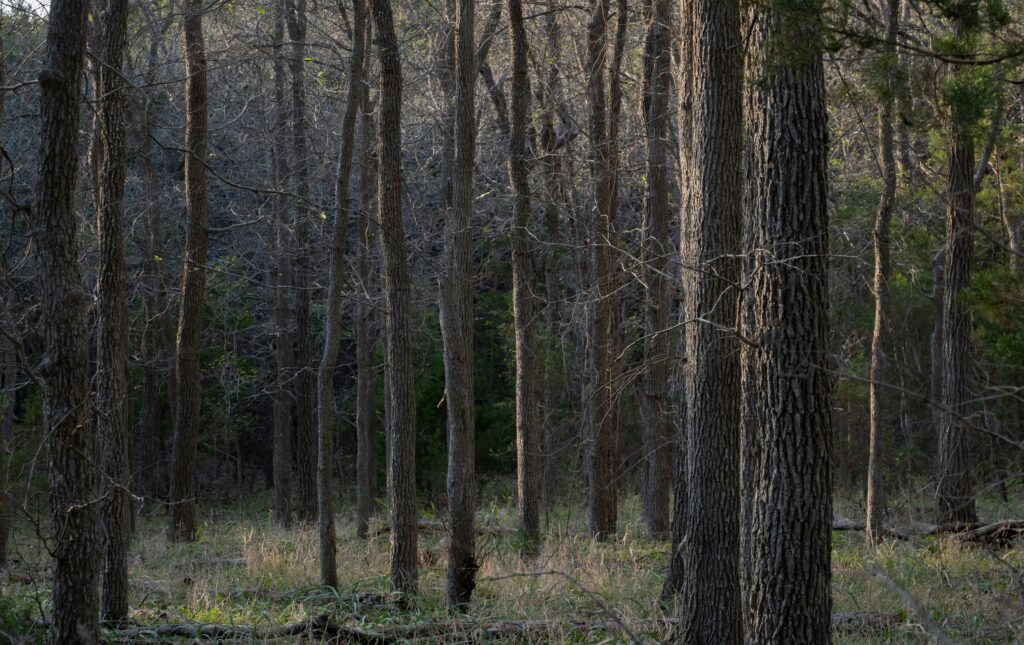
Ogden describes a layered effect. “Behind the spreading edge, the woodlands are filling in,” he says. Patchy infestation becomes continuous. “The tick numbers are going up, so in any one location, the chance of getting a tick bite is increasing. And because the numbers are increasing, the transmission cycles are becoming more efficient, so the proportion of ticks that are infected is going up as well.”
Read that again, because there are three problems stacked together. More places have ticks. Those places have more ticks. And more of those ticks carry disease. For someone living in an area that already had ticks a decade ago, the risk today is higher on all three counts.
What this looks like across North America
Ticks do not check for borders. But the forces pushing them around are not the same everywhere, and it is worth being precise about which force is doing the work. Climate’s fingerprint is clearest at the northern edge of the range, in Canada and the northeastern United States. Farther south, other drivers likely dominate.
“A lot of that is about habitat change,” Ogden says of the United States, “going from farmland to woodlands, deer populations increasing, and then the tick expanding its range into that now suitable environment.” Reforestation and booming deer herds give ticks both the habitat and the hosts they need. “The range expansion is happening in all directions,” he adds, “as long as it’s climatically suitable.”
Start at the northern edge, where Ogden works. Lyme disease was barely a Canadian concern a generation ago. Now the blacklegged tick is advancing across the country at an estimated 35 to 55 kilometers a year, and reported Lyme cases have climbed steeply, from 144 in 2009 to 2,634 in 2019, with the true count thought to be far higher because many cases go unreported. The disease is now established in parts of Ontario, Quebec, Manitoba, Nova Scotia, and New Brunswick, a reach it did not have a generation ago.
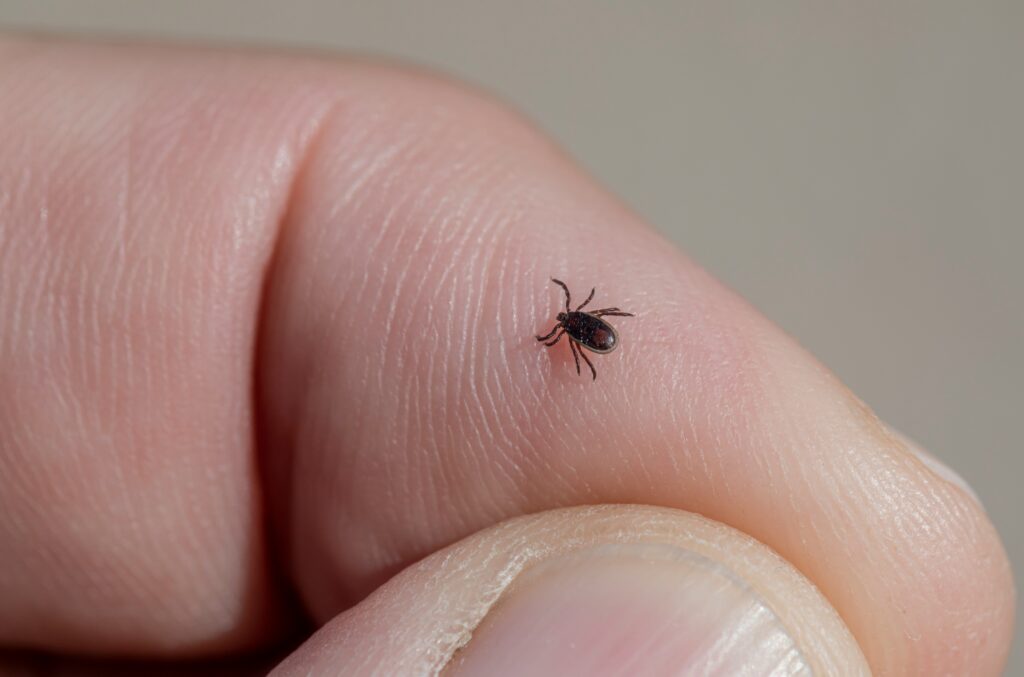
In the United States, the surveillance data bear out the same trend. The blacklegged tick, which carries Lyme disease, is widely distributed across the eastern United States, reaching from Florida north to Maine and west to the edge of the Great Plains. The number of US counties with established blacklegged tick populations more than doubled between the late 1990s and 2015, climbing from 396 to 842. Nymphs, the poppy-seed-sized stage that bites people most often, are emerging earlier in the spring, stretching the season when people are at risk.
Warming is part of that story, but at these latitudes it is likely not the main one. Farmland returning to forest, deer populations booming, and suburban development pushing people deeper into tick habitat all raise the risk of a bite. Disentangling how much each factor contributes, climate included, remains an open research question.
The lone star tick, a southern species behind the alpha-gal red meat allergy, is on the same northward march, pushing into the upper Midwest and coastal New England, where it was rare a generation ago. Researchers have also found that some northern lone star populations are genetically distinct from the historic southern range, raising the possibility that the tick is adapting as it moves, not simply relocating.
At the southern end, the danger is not a new disease but a more aggressive version of an old one. Rocky Mountain spotted fever (RMSF) has been present in the United States for over a century, and most US cases occur in the South-Central states. But along the southwestern border, a different vector is reshaping the threat. Unlike the wood ticks that usually spread the disease in remote areas, the brown dog tick lives in and around homes, and it has driven a severe, high-fatality form of RMSF. In Arizona, a brown-dog-tick epidemic on tribal lands has caused nearly 500 cases and 28 deaths since 2003, with incidence in the hardest-hit communities running far above the national average. The same dynamic has burned through northern Mexico and reached the border city of Tijuana in 2021. Heat appears to make this tick more dangerous to people directly: In lab work, brown dog ticks were more than twice as likely to choose humans over dogs as temperatures rose toward 100 degrees. Researchers warn the disease could become established in more southwestern communities where free-roaming dogs and brown dog ticks are common.
From hypothesis to reality
For years, the spread of tick-borne disease into new territory was something scientists projected. Now it is something they document.
“It was always a bit of a hypothesis that Lyme disease would emerge in Canada, and it’s really happening. So, it’s a reality for us,” says Ogden.
The same arc is visible in the US numbers. Lyme is the most common vector-borne disease in the country. The CDC counted over 89,000 reported cases in 2023, and because so many cases never make it into formal surveillance, the agency estimates that roughly 476,000 people are diagnosed and treated for Lyme each year. The forecast, in other words, has already arrived.
None of this makes the outdoors something to avoid. Ogden is quick to say so, and the practical defenses, covering up, using repellent, and checking for ticks, still work. But the map under our feet is changing, whether the engine behind it is a warming climate, a regrown forest, or a growing deer herd. In the north, at least, the old assumption that winter will hold the line does not hold. The ticks were never waiting for spring to thaw them out. They were waiting for it to warm up enough to grow.

